
Saturday, 14 July 2012
AI systems could fight cyberbullying
Smart software could detect online bullying via a database system that can identify even the subtlest of abusive comments
 "I have been bullied my entire life. About how I look like a whale and how im not pretty enough. I cant get boyfriends because i refuse to have sex until I am married. I just dont know what to do anymore...:\" - Samantha, 16
Pleas for help like this one appear on social media and internet forums every day, written by desperate teenagers who live their entire lives online. Knowing you're not alone can help. That's the idea behind new software that matches up such messages with similar posts from other worried teenagers, letting them know that what they're experiencing isn't unusual. It might also be possible to spot bullying behaviour as it happens online.
Recent high-profile cases have made cyberbullying front page news. In January, 15-year-old Amanda Diane Cummings died after jumping in front of a bus on Staten Island, New York. She'd been subjected to a campaign of bullying on Facebook by other pupils at her school. Last September, Jamey Rodemeyer, a 15-year-old boy from Buffalo, New York, killed himself after being teased online about his sexuality. The cases sparked lawmakers to push through legislation, passed by the state senate last week, that makes cyberbullying a crime.
To help tackle one part of the problem, Karthik Dinakar at the Massachusetts Institute of Technology and colleagues have been working on a project that analyses the posts written by teenagers on A Thin Line, a website run by MTV. The site encourages teenagers to post their problems anonymously and other teenagers leave comments giving advice. Many of the posts concern bullying and worries about sex.
Each of the website's 5500 posts were fed through an algorithm trained to recognise certain clusters of words and then categorise each post according to one or more of 30 themes, ranging from "duration of a relationship" to "using naked pictures of girlfriend". The words "boyf" "trust" "cheat" "break" "upset" in the same story might indicate the post was about a relationship ending, for example. Once a label was assigned, the algorithm picked another story on the site that covered the same themes.
"All these teenagers are still growing emotionally, and there's a tendency to think that their experience is singular to themselves," says Dinakar. "It can let them know that they are not alone in their plight."
The software was tested usinga set of new stories written by volunteers, which it analysed and matched with stories from the website. The volunteers rated the system very positively. They felt that the stories picked using the thematic algorithm were always a much closer match than those chosen using a basic algorithm that just matched keywords. The system was presented at a conference on social media in Dublin, Ireland, earlier this month. MTV now plans to start using it to match stories live on the site, so teenagers can read about those in a similar plight.
Can artificial intelligence also stop cyberbullying at its source? After Amanda Cummings died, her memorial Facebook page was filled with offensive comments, leaving her parents understandably distraught. So Dinakar is also developing software that will help spot online bullying as it happens.
Facebook has taken steps to stop cyberbullying, but it primarily relies on users flagging up comments as inappropriate.
To find less-obvious forms of abuse, Dinakar built software that compares online posts to an open-source database called ConceptNet. This is a network of phrases and words and the relationships between them that lets computers understand what humans are talking about. This way the system can work out what might be a bullying comment, even though it contains no abusive words. For example, it would know that: "Put on a wig and lipstick and be who you really are" aimed at a boy might be a negative comment on his sexuality, because ConceptNet knows that girls usually wear make-up, while boys do not.
The idea is that software like this could be integrated into a social network. If it spots patterns of bullying behaviour, it may either flash up a box warning the bully, ban offending posts, or offer help and advice to the victim. Dinakar wants to combine his two projects to create a detector that can pick up even the subtlest of attacks, such as "liking" a negative Facebook status to make a nasty point, for example. The research is due to appear in the journal ACM Transactions on Interactive Intelligent Systems in July.
Danah Boyd of Microsoft Research in Cambridge, Massachusetts, says that although this kind of work won't solve the problem of online bullying, it will help to improve our understanding of what happens online.
"I'm glad that these researchers are working to identify different types of meanness and cruelty," she says. "I am very hopeful that these kinds of techniques will lead to a more holistic understanding of the problem."

Gel mixture lets you hide a secret message in goo

Tuesday, 10 July 2012
Computer modelling
A theory has only the alternative of being right or wrong. A model has a third possibility; it may be right, but irrelevant.
Manfred Egan
If you put tomfoolery into a computer, nothing comes out of it but tomfoolery. But this tomfoolery, having passed through a very expensive machine, is somehow ennobled and no-one dares criticize it.
Pierre Gallois
This is one of the most powerful tools available to science and engineering and, like all powerful tools, it brings dangers as well as benefits. Andrew Donald Booth said “Every system is its own best analogue”. As a scientist he should, of course, have said in what sense he means best. The statement is true in terms of accuracy but not in terms of utility. If you want to determine the optimum shape for the members of a bridge structure, for example, you cannot build half a dozen bridges and test them to destruction, but you can try large numbers of variations in a computer model. Computers allow us to optimise designs in ways that were unavailable in times past. Nevertheless, the very flexibility of a computer program, the ease with which a glib algorithm can be implemented with a few lines of code and the difficulty of fully understanding its implications can pave the path to Cloud Cuckoo Land.
The main hazards of computer modelling can be summarised under a few headings:
Assumptions
At almost every stage in the development of a model it is necessary to make assumptions, perhaps hundreds of them. These might or might not be considered reasonable by others in the field, but they rapidly become hidden. Some of the larger models of recent times deal with the interactions of variables whose very nature is virtually unknown to science.
Auditability
In olden times, if a scientist published a theory, all the stages of reasoning that led to it could be critically examined by other scientists. With a computer model, it is possible, within a few days of development, for it to become so complex that it is a virtual impossibility for an outsider to understand it fully. Indeed, where it is the result of a team effort, it becomes unlikely that any individual understands it.
Omissions
Often vital elements can be left out of a model and the effect of the omissions is only realised if and when it is tested against reality. A notorious example is the Millennium Bridge in London. It was only after it was built and people started to walk on it that the engineers realised that they had created a resonant structure. This could have been modelled dynamically if they had thought about it. Some models that produce profound political and economic consequences have never faced such a challenge.
Subconscious
The human subconscious is a powerful force. Even in relatively simple physical measurements it has been shown that the results can be affected by the desires and expectations of the experimenter. In a large computer model this effect can be multiplied a thousandfold. Naturally, we discount the possibility of deliberate fraud.
Sophistication
This word, which literally means falsification or adulteration, has come to mean advanced and efficient. In large computer models, however, the literal meaning is often more applicable. The structure simply becomes too large and complex for the inputs that support it.
Testability
When we were pioneering the applications of computer modelling about forty years ago, we soon came to the conclusion that a model is useless unless it can be tested against reality. If a model gives a reasonably accurate prediction on a simple system then we have reasonable, but not irrefutable, grounds for believing it to be accurate in other circumstances. Unfortunately, this is one of the truisms that have been lost in the enthusiasms of the new age.
Chaos
Large models are often chaotic, which means that very small changes in the input variables produce very large changes in the output variables. Some very simple processes can amplify errors, taking the difference between numbers of a similar magnitude for example. The errors (or noise) are then propagated through the system. If there are feedback mechanisms present, it is quite possible for systems to operate on the noise alone.
Many of the computer models that receive great media coverage and political endorsement fail under some of these headings; and , indeed, some fail under all of them. Yet they are used as the excuse for profound, and often extremely damaging, policies that affect everyone.
That is why computer models are dangerous tools.
Computer Models of Watershed Hydrology [Hardcover]

This book stemmed from a desire to provide a comprehensive account of some of the world's popular computer models of watershed hydrology. The subject matter of this book is divided into 29 chapters. Beginning with introductory remarks on watershed modeling in Chapter 1, model calibration and reliability estimation are presented in Chapters 2 and 3, respectively. The next ten chapters (4 to 13) present some of the popular models from around the world. These models are in the realm of civil engineering applications of watershed hydrology models. Some of the models are more comprehensive than others and some have the management capabilities. The next two models, presented in Chapters 14 and 15, are large-scale models and embody GIS and remote sensing technology. The models presented in Chapters 16 to 23 are more physically-based and distributed in nature, quite suited to nonpoint source pollution modeling, and to assess environmental impact of land use changes. The remaining 5 models presented in Chapters 24 to 29 are within the realm of agricultural and forestry applications. Nonpoint source pollution, erosion and impact on soil productivity, drainage design, etc., can be modeled by applying these models. Computer Models of Watershed Hydrology will be of interest to practicing hydrologists, especially to hydrologic modelers and the model users, as well as specialists in the fields of civil engineering, agricultural engineering, environmental science, forest and range science, earth science, climatology, and watershed sciences. Graduate students, teachers engaged in graduate instruction, and researchers will also find this book useful. Due to the popularity of this book and with innovations in printing, this was reprinted in 2012 with the original information. It is now part of WRP s Classic Resource Edition. Reprinted 2012 by WRP in hardbound edition see New ISBN #9781887201742.
Saturday, 7 July 2012
Computer model predicts brain tumor growth and evolution
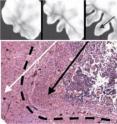
Researchers from Brown University and other institutions have developed a computational computer model of how brain tumors grow and evolve. The model is the product mathematical formulas based on the first principals of physics, such as conservation of mass, and it has allowed researchers to recreate tumor growth in a computer. Through subsequent repetitive testing against real tumors, they have also linked their computerized tumors to real-world brain tumors, or "gliomas," and can now watch tumor growth on a computer screen.
 Creating such a model is significant because it could help design specific, targeted treatments for individualized therapy. There is no cure for gliomas, which can kill quickly, often within 15 months of diagnosis. Massachusetts Sen. Ted Kennedy announced a year ago that he was suffering from this type of tumor, a malignant glioma of the brain.
Details of the research were highlighted at an April meeting of the American Association for Cancer Research. The full article is included in the May 15 edition of the journal Cancer Research.
"This helps us design a treatment," said Elaine Bearer, the lead author and professor of pathology and laboratory medicine at Brown. "By testing potential therapies in the computer, we can get our new drugs much faster to patients."
 Bearer, who also has faculty appointments in the Division of Engineering and the Department of Music, worked with a number of collaborators on the project, including co-author and Vittorio Christini, a mathematician at the University of Texas.
To conduct the study, Bearer and her collaborators developed a mathematical formula that incorporated a number of equations describing the process of tumor evolution and growth. The master computational model was built on formulas that predict how much oxygen tumor cells consume and the rate of oxygen diffusion, and quantitative measures of cell growth and metabolic rates. The model is a series of interdependent differential equations. Each equation includes variables, or numerical values that can be experimentally manipulated.
For example, to test if oxygen consumption rates influence tumor growth, the values assigned to those rates can be changed and the outcome observed on the computer screen — not unlike playing a computer game. The result: A three-dimensional matrix of a glioma that can be adjusted to see what its growth stage will be over time, including speed of growth, size and shape.
Researchers validated their computational model with glioma specimens. Bearer studied about 40 different human brain tumor samples. Bryan Kinney, a member of Bearer's lab, obtained the samples from a number of sources, including the Rhode Island Hospital pathology department, the Columbia University Brain Bank and the Cooperative Human Tissue Network, a division of the National Cancer Institute that helps increase access to human cancer tissue for research.
The samples, sliced and sealed in a specimen slide, were as large as a chick pea or as small as the head of a pin. The tumor specimens used in the studies had been removed for diagnosis or surgical treatment of the tumor.
Researchers compared their virtual computational tumor with the actual human brain tumor samples at different stages of tumor evolution. Through many rounds of checking computer output against the real-life tumors, researchers created a computational model that mimicked natural biological tumors in all respects.
They focused specifically on a glioma because it does not invade the body through a basement membrane as epithelial-based cancers do, such as tumors that grow in the colon, breast or prostate. In the brain, tumors grow without having to digest a basement membrane to invade adjacent tissue. A basement membrane is essentially boundary of a given tissue that separates cells from the surrounding connective tissue.
Bearer said she hopes the research will allow doctors to find drug targets for glioma. She also envisions using the computational model to find targets for personalized medical therapies, enabling it to quickly identify molecular targets, and then select from existing treatments or design new treatments to stop the tumor.

Could sarcastic computers be in our future? New math model can help computers understand inference
Researchers have created a mathematical model that helps predict pragmatic reasoning and may eventually lead to the manufacture of machines that can better understand inference, context and social rules.
Friday, 6 July 2012
Computer/Electrical Engineering
An International Journal
The impact of computers has nowhere been more revolutionary than in electrical engineering. The design, analysis, and operation of electrical and electronic systems are now dominated by computers, a transformation that has been motivated by the natural ease of interface between computers and electrical systems, and the promise of spectacular improvements in speed and efficiency.
Published since 1973, Computers and Electrical Engineering provides rapid publication of topical research into the integration of computer technology and computational techniques with electrical and electronic systems. The journal publishes papers featuring novel implementations of computers and computational techniques in areas like signal and image processing, high-performance computing, parallel processing, and communications. Special attention will be paid to papers describing innovative architectures, algorithms, and software tools.
Specific topics of interest include:
Applications of high-performance computing and novel computing systems
Internet-based, multimedia, and wireless networks and applications
Communications, especially wireless
Signal processing architectures, algorithms, and applications
Green technologies in information, computing, and communication systems
Multi-disciplinary areas, including robotics, embedded systems, and security
Tuesday, 3 July 2012
Could Sarcastic Computers Be in Our Future? New Math Model Can Help Computers Understand Inference
In a new paper, the researchers describe a mathematical model they created that helps predict pragmatic reasoning and may eventually lead to the manufacture of machines that can better understand inference, context and social rules.
 Noah Goodman, right, and Michael Frank, both assistant professors of psychology, discuss their research at the white board that covers the wall in Goodman's office
Language is so much more than a string of words. To understand what someone means, you need context.
Consider the phrase, "Man on first." It doesn't make much sense unless you're at a baseball game. Or imagine a sign outside a children's boutique that reads, "Baby sale -- One week only!" You easily infer from the situation that the store isn't selling babies but advertising bargains on gear for them.
Present these widely quoted scenarios to a computer, however, and there would likely be a communication breakdown. Computers aren't very good at pragmatics -- how language is used in social situations.
But a pair of Stanford psychologists has taken the first steps toward changing that.
In a new paper published recently in the journal Science, Assistant Professors Michael Frank and Noah Goodman describe a quantitative theory of pragmatics that promises to help open the door to more human-like computer systems, ones that use language as flexibly as we do.
The mathematical model they created helps predict pragmatic reasoning and may eventually lead to the manufacture of machines that can better understand inference, context and social rules. The work could help researchers understand language better and treat people with language disorders.
It also could make speaking to a computerized customer service attendant a little less frustrating.
"If you've ever called an airline, you know the computer voice recognizes words but it doesn't necessarily understand what you mean," Frank said. "That's the key feature of human language. In some sense it's all about what the other person is trying to tell you, not what they're actually saying."
Frank and Goodman's work is part of a broader trend to try to understand language using mathematical tools. That trend has led to technologies like Siri, the iPhone's speech recognition personal assistant.
But turning speech and language into numbers has its obstacles, mainly the difficulty of formalizing notions such as "common knowledge" or "informativeness."
That is what Frank and Goodman sought to address.
The researchers enlisted 745 participants to take part in an online experiment. The participants saw a set of objects and were asked to bet which one was being referred to by a particular word.
For example, one group of participants saw a blue square, a blue circle and a red square. The question for that group was: Imagine you are talking to someone and you want to refer to the middle object. Which word would you use, "blue" or "circle"?
The other group was asked: Imagine someone is talking to you and uses the word "blue" to refer to one of these objects. Which object are they talking about?
"We modeled how a listener understands a speaker and how a speaker decides what to say," Goodman explained.
The results allowed Frank and Goodman to create a mathematical equation to predict human behavior and determine the likelihood of referring to a particular object.
"Before, you couldn't take these informal theories of linguistics and put them into a computer. Now we're starting to be able to do that," Goodman said.
The researchers are already applying the model to studies on hyperbole, sarcasm and other aspects of language.
"It will take years of work but the dream is of a computer that really is thinking about what you want and what you mean rather than just what you said," Frank said.

Computer/Electrical Engineering
NSA offers some of the world's most demanding and exhilarating high-tech engineering challenges. Our entry-level engineers work with teams, following a project from beginning through completion. This means you'll be involved in multiple stages of the project, including requirements analysis, design, simulation, experimentation, benchwork, prototype development and testing, manufacturing, and possibly, field work. You'll be part of a multidisciplinary team made up of Engineers, Computer Scientists, Mathematicians, Analysts, Contractors, and other project members.
Career Paths in Computer/Electrical Engineering
Design of special-purpose computers and antenna systems
Pattern recognition technologies
Signals analysis
Optics
Design, development, and testing of electronic communications
You may also be working in our microelectronics fabrication facility, including a 20,000-square-foot "Class 10" clean room. In this setting, you will be performing such tasks as electron beam maskmaking and "direct write" wafer lithography.
Our Dual Track system affords you the opportunity to choose to expand your technical prowess or move toward a management role within NSA.
Technical Skills for Computer/Electrical Engineering
The following technical skills are needed throughout NSA:
Network Engineering — Design/Analysis of LANs/WANs, Routers, Switches, Firewalls, Protocol
Software Engineering — JAVA, C++, XML, HTML, Web Applications, Object Oriented Analysis and Design, Rapid Prototyping, Algorithm Development
Communications — Digital and Analog, Fixed and Mobile Wireless, Satellite, Antenna Design
Systems Engineering — Inter-disciplinary Engineering, Requirements Definition, Architecture, Design, Interface Specification, Integration, Validation, Modeling and Simulation developing installation/acceptance test plans.
Microelectronics — VHDL, FPGA, Microelectronic Manufacturing and Testing (MCM, SOC), Electronic Packaging, VLSI
As a Computer/Electrical Engineer at NSA, you can apply your skills in a variety of ways. Click on the sections below and discover just some of the many things you may work on.
Computer simulation
A computer simulation or a computer model is a computer program that attempts to simulate an abstract model of a particular system.
 Computer simulations have become a useful part of mathematical modelling of many natural systems in physics, chemistry and biology, human systems in economics, psychology, and social science and in the process of engineering new technology, to gain insight into the operation of those systems.
Traditionally, the formal modeling of systems has been via a mathematical model, which attempts to find analytical solutions to problems which enables the prediction of the behaviour of the system from a set of parameters and initial conditions.
Computer simulations build on, and are a useful adjunct to purely mathematical models in science, technology and entertainment.
The reliability and the trust people put in computer simulations depends on the validity of the simulation model.
3D computer graphics
3D computer graphics (in contrast to 2D computer graphics) are graphics that utilize a three-dimensional representation of geometric data that is stored in the computer for the purposes of performing calculations and rendering 2D images.
 Such images may be for later display or for real-time viewing.
Despite these differences, 3D computer graphics rely on many of the same algorithms as 2D computer vector graphics in the wire frame model and 2D computer raster graphics in the final rendered display.
In computer graphics software, the distinction between 2D and 3D is occasionally blurred; 2D applications may use 3D techniques to achieve effects such as lighting, and primarily 3D may use 2D rendering techniques.
3D computer graphics are often referred to as 3D models.
Apart from the rendered graphic, the model is contained within the graphical data file.
However, there are differences.
A 3D model is the mathematical representation of any three-dimensional object (either inanimate or living).
A model is not technically a graphic until it is visually displayed.
Due to 3D printing, 3D models are not confined to virtual space.
A model can be displayed visually as a two-dimensional image through a process called 3D rendering, or used in non-graphical computer simulations and calculations.
Mathematical model
A mathematical model is an abstract model that uses mathematical language to describe the behaviour of a system.
 Mathematical models are used particularly in the natural sciences and engineering disciplines (such as physics, biology, and electrical engineering) but also in the social sciences (such as economics, sociology and political science); physicists, engineers, computer scientists, and economists use mathematical models most extensively.
Eykhoff (1974) defined a mathematical model as 'a representation of the essential aspects of an existing system (or a system to be constructed) which presents knowledge of that system in usable form'.
Mathematical models can take many forms, including but not limited to dynamical systems, statistical models, differential equations, or game theoretic models.
These and other types of models can overlap, with a given model involving a variety of abstract structures.
There are six basic groups of variables: decision variables, input variables, state variables, exogenous variables, random variables, and output variables.
Since there can be many variables of each type, the variables are generally represented by vectors.
Mathematical modelling problems are often classified into black box or white box models, according to how much a priori information is available of the system.
A black-box model is a system of which there is no a priori information available.
A white-box model (also called glass box or clear box) is a system where all necessary information is available.
Practically all systems are somewhere between the black-box and white-box models, so this concept only works as an intuitive guide for approach.
Usually it is preferable to use as much a priori information as possible to make the model more accurate.
Security engineering
Security engineering is the field of engineering dealing with the security and integrity of real-world systems.
 It is similar to systems engineering in that its motivation is to make a system meet requirements, but with the added dimension of enforcing a security policy.
It has existed as an informal field for centuries, in the fields of locksmithing and security printing. Technological advances, principally in the field of computers, have now allowed the creation of far more complex systems, with new and complex security problems.
Because modern systems cut across many areas of human endeavor, security engineers not only need consider the mathematical and physical properties of systems; they also need to consider attacks on the people who use and form parts of those systems using social engineering attacks.
Secure systems have to resist not only technical attacks, but also coercion, fraud, and deception by confidence tricksters. For this reason it involves aspects of social science, psychology and economics, as well as physics, chemistry and mathematics.
Some of the techniques used, such as fault tree analysis, are derived from safety engineering.
Monoculture
Monoculture describes systems that have very low diversity.
 In agriculture, "monoculture" describes the practice of relying on a very small number of genetic variants, or cultivars of a food crop for commercial agricultural.


Computer Model Successfully Predicts Drug Side Effects
A new set of computer models has successfully predicted negative side effects in hundreds of current drugs, based on the similarity between their chemical structures and those molecules known to cause side effects, according to a paper appearing online this week in the journal Nature.
 The team, co-led by researchers in the UCSF School of Pharmacy, Novartis Institutes for BioMedical Research (NIBR) and SeaChange Pharmaceuticals, Inc. -- a UCSF spinoff company launched by two of the paper's authors -- set out to test how well a computer model could help researchers eliminate risky drug prospects by identifying which ones were most likely to have adverse side effects.
Drugs frequently interact with more than one target, with hundreds of these targets linked to the side effects of clinically used therapeutics. Focusing on 656 drugs that are currently prescribed, with known safety records or side effects, the team was able to predict such undesirable targets -- and thus potential side effects -- half of the time.
That's a significant leap forward from previous work, which has never tackled hundreds of compounds at once, according to Brian Shoichet, PhD, a UCSF professor of pharmaceutical chemistry who was the joint advisor on the project alongside Laszlo Urban, MD, PhD, at Novartis.
As a result, it offers a possible new way for researchers to focus their efforts on developing the compounds that will be safest for patients, while potentially saving billions of dollars each year that goes into studying and developing drugs that fail.
"The biggest surprise was just how promiscuous the drugs were, with each drug hitting more than 10 percent of the targets, and how often the side-effect targets were unrelated to the previously known targets of the drugs," said Shoichet, whose lab uses computational simulations to identify new targets for known drugs. "That would have been hard to predict using standard scientific approaches."
Adverse drug effects are the second most common reason, behind effectiveness, that potential drugs fail in clinical trials, according to the paper. The cost of developing an approvable drug is frequently cited at about $1 billion across 15 years, although recent estimates have ranged as high as $4 billion to $12 billion per drug, depending upon how many of these failures are included in the estimate.
"This basically gives you a computerized safety panel, so someday, when you're deciding among hundreds of thousands of compounds to pursue, you could run a computer program to prioritize for those that may be safest," said Michael Keiser, PhD, co-first author of the paper, who started working on the project as a doctoral student in Shoichet's lab and co-founded SeaChange with Shoichet and John Irwin, PhD, also of UCSF, upon graduation.
It also offers the possibility for identifying possible new uses for medications that are already on the market, according to Peter Preusch, Ph.D., who oversees structure-based drug design grants at the National Institutes of Health's National Institute of General Medical Sciences, which partly supported the study.
"By providing a way to identify the unintended targets of a drug, this advance will not only help streamline the drug development pipeline, but also will provide valuable guidance in efforts to repurpose existing drugs for new diseases and conditions," Preusch said. "This work represents a notable contribution that is likely to find broad applications in the pharmaceutical arena."
The project builds on UCSF's legacy as a leader in developing computer-based approaches to efficiently screen millions of chemicals for those with the best potential for drug development. The UCSF School of Pharmacy was the first to develop computer-based molecular "docking" software, which both public and private researchers use to visualize how potential drugs might attach to target molecules to inhibit their function. It also builds upon UCSF's commitment to industry collaborations that advance pharmaceutical science. Novartis has one of the strongest and most productive drug pipelines in the industry, with more than 130 projects in clinical development, according to the company.
The current project is based on technology UCSF developed, known as the "similarity ensemble approach" (SEA), which compares the shape of each drug to thousands of other compounds and uses that to predict which proteins they might both bind to -- essentially, guilt by association. The technique was named among Wired magazine's "Top Scientific Breakthroughs of 2009."
In this project, the UCSF and SeaChange team ran a computer screen on 656 drugs that are currently in clinical use to predict which ones were most likely to bind to the 73 target proteins that appear on Novartis' safety panel for testing drugs for side effects such as heart attacks. Meanwhile, NIBR developed a statistical method of relating those targets to known side effects.
The computer model identified 1,241 possible side-effect targets for the 656 drugs, of which 348 were confirmed by Novartis' proprietary database of drug interactions. Another 151 hits revealed potential side effects that had never been identified for these drugs, yet which Novartis confirmed through lab testing. Among those was a synthetic form of estrogen that has been known for years to cause stomach pain, with no known cause. The screen showed that it binds strongly to a target known as COX-1, which is the protein target of non-steroidal anti-inflammatory drugs, such as aspirin, which also can cause stomach pain, ulceration, and bleeding.
Keiser is co-first author on the Nature paper alongside Eugen Lounkine, PhD, a postdoctoral scholar in the Novartis Institutes for Biomedical Research whose postdoctoral advisors are Urban and Shoichet.
Additional authors include Steven Whitebread, Dmitri Mikhailov and Jeremy Jenkins, from the NIBR's facilities in Cambridge, Mass.; Jacques Hamon, Eckhard Weber and Serge Côté, from NIBR in Basel, Switzerland; and Allison Doak, in the UCSF Department of Pharmaceutical Chemistry.
The project was supported by the National Institutes of Health and by the QB3 Rogers Family Foundation Bridging-the-Gap Award. The authors declare competing financial interests in the project: both Shoichet and Keiser are co-founders of SeaChange, which is developing the method to find new therapeutic uses of known drugs and address toxicology issues.

Computer Model Pinpoints Prime Materials for Efficient Carbon Capture
Current technologies would use about one-third of the energy generated by the plants -- what's called "parasitic energy" -- and, as a result, substantially drive up the price of electricity.
But a new computer model developed by University of California, Berkeley, chemists shows that less expensive technologies are on the horizon. They will use new solid materials like zeolites and metal oxide frameworks (MOFs) that more efficiently capture carbon dioxide so that it can be sequestered underground.
 This is an example of the 50 best zeolite structures for capturing carbon dioxide. Zeolite is a porous solid made of silicon dioxide, or quartz. In the model, the red balls are oxygen, the tan balls are silicon. The blue-green area is where carbon dioxide prefers to adsorb. (Credit: Berend Smit laboratory, UC Berkeley)
But a new computer model developed by University of California, Berkeley, chemists shows that less expensive technologies are on the horizon. They will use new solid materials like zeolites and metal oxide frameworks (MOFs) that more efficiently capture carbon dioxide so that it can be sequestered underground.
"The current on-the-shelf process of carbon capture has problems, including environmental ones, if you do it on a large scale," said Berend Smit, Chancellor's Professor in the departments of chemical and biomolecular engineering and of chemistry at UC Berkeley and a faculty senior scientist in the Materials Sciences Division at Lawrence Berkeley National Laboratory (LBNL). "Our calculations show that we can reduce the parasitic energy costs of carbon capture by 30 percent with these types of materials, which should encourage the industry and academics to look at them."
Smit and his colleagues at UC Berkeley, LBNL, Rice University and the Electric Power Research Institute (EPRI) in Palo Alto, Calif., who will publish their results online May 27 in advance of publication in the journal Nature Materials, already are integrating their database of materials into power plant design software.
"Our database of carbon capture materials is going to be coupled to a model of a full plant design, so if we have a new material, we can immediately see whether this material makes sense for an actual design," Smit said.
Guiding new materials research
There are potentially millions of materialsthat can capture carbon dioxide, but it's physically and economically impossible for scientists and engineers to synthesize and test them all, Smit said. Now, a researcher can upload the structure of a proposed material to Smit's website, and the new computer model will calculate whether it offers improved performance over the energy consumption figures of today's best technology for removing carbon.
"What is unique about this model is that, for the first time, we are able to guide the direction for materials research and say, 'here are the properties we want, even if we don't know what the ultimate material will look like,'" said Abhoyjit Bhown, a co-author of the study and a technical executive at EPRI, which conducts research and development for the electric power industry and the public. "Before, people were trying to figure out what materials they should shoot for, and that question was unanswered until now."
Fossil fuel-burning power plants, in particular coal-burning units, are a major source of the carbon dioxide that is rapidly warming the planet and altering the climate in ways that could impact crops and water supplies, raise sea level and lead to weather extremes. Even with the move toward alternative, sustainable and low-carbon sources of energy, ranging from solar and wind to hydrothermal, coal- and natural gas-burning power plants are being built at an increasing rate around the world. At some point, Smit said, carbon capture will be the only way to reduce carbon emissions sufficiently to stave off the worst consequences of climate change.
Although no commercial power plants currently capture carbon dioxide on a large scale, a few small-scale and pilot plants do, using today's best technology: funneling emissions through a bath of nitrogen-based amines, which grab carbon dioxide from the flue gases. The amines are then boiled to release the CO2. Additional energy is required to compress the carbon dioxide so that it can be pumped underground.
The energy needed for this process decreases the amount that can go into making electricity. Calculations show that for a coal-fired power plant, that could amount to approximately 30 percent of total energy generated.
Solid materials should be inherently more energy-efficient than amine scrubbing, because the CO2 can be driven off at lower temperatures. But materials differ significantly in how tightly they grab CO2 and how easily they release it. The best process will be a balance between the two, Smit said.
Smit and his UC Berkeley group worked with Bhown and EPRI scientists to establish the best criteria for a good carbon capture material, focusing on the energy costs of capture, release and compression, and then developed a computer model to calculate this energy consumption for any material. Smit then obtained a database of 4 million zeolite structures compiled by Rice University scientists and ran the structures through his model. Zeolites are porous materials made of silicon dioxide, the same composition as quartz.
The team also computed the energy efficiency of 10,000 MOF structures, which are composites of metals like iron with organic compounds that, together, form a porous structure. That structure has been touted as a way to store hydrogen for fuel or to separate gases during petroleum refining.
"The surprise was that we found many materials, some already known but others hypothetical, that could be synthesized" and work more energy efficiently than amines, Smit said. The best materials used 30 percent less energy than the amine process, though future materials may work even better. The computer model will work for structures other than zeolites and MOFs, Smit said.
Bhown said that the theoretically best material will probably have a parasitic energy cost of about 10 percent, so processes that use 20 percent or less are more attractive.
GPUs dramatically speed calculations
Key to the team's success was using graphics processing units (GPUs) instead of standard computer central processing units (CPUs), GPUs reduced each structure's calculation, which involves complex quantum chemistry, from 10 days to 2 seconds.
Bhown noted that most people believe that some economic incentives or regulatory frameworks are needed to implement carbon capture, and the EPRI's goal is to help the industry identify the best technologies for doing so. A survey that EPRI conducted recently suggested that developing any new technology would take 10-15 years even with adequate funding.
"The collaboration between different parts of the Department of Energy illustrates what can be achieved if researchers working on the most fundamental aspects of carbon capture collaborate with their industry counterparts" says Karma Sawyer, DOE program director. "This study shows how engineering and fundamental science can speed-up the process of discovery and implementation of promising materials ready to test in the field."
"The hope is that there is a system set up such that, when someone comes up with a promising material, we can rapidly test it and get it to a readiness level pretty quickly," he said. "We are all excited by this work and look forward to pursuing it further."
Other coauthors of the study are graduate students Li-Chiang Lin and Joseph A. Swisher of UC Berkeley; Adam H. Berger of the EPRI; Richard L. Martin, Chris H. Rycroft and Maciej Haranczyk of LBNL's Computational Research Division; post-doctoral fellows Jihan Kim and Kuldeep Jariwala of LBNL's Materials Science Division; and Michael W. Deem of the Departments of Bioengineering and Physics and Astronomy at Rice University.
This work has been supported by the Department of Energy through National Energy Technology Laboratory, Advanced Research Projects Agency -- Energy (ARPA-E) and Office of Science, and through EPRI's Office of Technology Innovation. Smit is also director of the Department of Energy-funded Energy Frontier Research Center at UC Berkeley.

New computer simulation can predict negative side effects of drugs
Drug testing is a time consuming, expensive, and at times dangerous proposition. But a new set of computer models has successfully predicted the negative side effects of hundreds of current drugs, a development that could see more efficient development of pharmaceuticals - and without the risks of testing on human and animal subjects.
Pharmaceuticals fail at the clinical-trial phase all the time, mostly on account of their ineffectiveness. They also fail because many of them tend to have rather nasty side effects — and often the only way to know whether or not these proposed drugs have these side effects is to test them on humans or animals.
There are also the costs to consider. It takes about $1 billion dollars and 15 years to bring a drug to market, with some estimates reaching as high as $4 billion to $12 billion per drug. It's the failures that often drive up these costs.
But a recent breakthrough in computer modeling is looking to change all this. According to a study that recently appeared in the journal Nature, a research team, co-led by researchers in the UCSF School of Pharmacy, Novartis Institutes for BioMedical Research (NIBR) and SeaChange Pharmaceuticals, Inc., put a computer simulation to the test to see if it could help identify drugs that would result in adverse side effects
To test their models, the researchers took 656 drugs that are currently on the market with known safety records or side effects. The simulation, which analyzes the similarity between chemical structures and those molecules known to cause side effects, was able to successfully predict the negative effects in half of the drugs. While not perfect, the researchers described their breakthrough as "a significant leap forward from previous work", in which they were never able to tackle hundreds of compounds at once.
In terms of specifics, the computer simulation identified 1,241 possible side-effect targets for the 656 drugs, of which 348 were confirmed by a proprietary database of drug interactions. Another 151 hits revealed potential side effects that had never been identified for these drugs, but were later confirmed through lab testing.
For example, researchers have known about a synthetic form of estrogen that has been known to cause stomach pain, but with no known cause. The simulation showed that it binds strongly to a target known as COX-1, which is the protein target of non-steroidal anti-inflammatory drugs, such as aspirin, which also can cause stomach pain, ulceration, and bleeding.
Looking to the future, the researchers describe the potential for a "computerized safety panel" that could not only detect adverse side effects of experimental drugs, but also provide valuable guidance in efforts to repurpose existing drugs for new diseases and conditions.
NEW COMPUTER MODEL ADVANCES CLIMATE CHANGE RESEARCH
BOULDER—Scientists can now study climate change in far more detail with powerful new computer software released by the National Center for Atmospheric Research (NCAR).
The Community Earth System Model (CESM) will be one of the primary climate models used for the next assessment by the Intergovernmental Panel on Climate Change (IPCC). The CESM is the latest in a series of NCAR-based global models developed over the last 30 years. The models are jointly supported by the Department of Energy (DOE) and the National Science Foundation, which is NCAR’s sponsor.
Scientists and engineers at NCAR, DOE laboratories, and several universities developed the CESM.
The new model’s advanced capabilities will help scientists shed light on some of the critical mysteries of global warming, including:
What impact will warming temperatures have on the massive ice sheets in Greenland and Antarctica?
How will patterns in the ocean and atmosphere affect regional climate in coming decades?
How will climate change influence the severity and frequency of tropical cyclones, including hurricanes?
What are the effects of tiny airborne particles, known as aerosols, on clouds and temperatures?
Modeling climate’s complexity. This image, taken from a larger simulation of 20th century climate, depicts several aspects of Earth’s climate system. Sea surface temperatures and sea ice concentrations are shown by the two color scales. The figure also captures sea level pressure and low-level winds, including warmer air moving north on the eastern side of low-pressure regions and colder air moving south on the western side of the lows. Such simulations, produced by the NCAR-based Community Climate System Model, can also depict additional features of the climate system, such as precipitation. Companion software, recently released as the Community Earth System Model, will enable scientists to study the climate system in even greater complexity. (©UCAR. Image courtesy Gary Strand, NCAR.) News media terms of use*
The CESM is one of about a dozen climate models worldwide that can be used to simulate the many components of Earth’s climate system, including the oceans, atmosphere, sea ice, and land cover. The CESM and its predecessors are unique among these models in that they were developed by a broad community of scientists. The model is freely available to researchers worldwide.
“With the Community Earth System Model, we can pursue scientific questions that we could not address previously,” says NCAR scientist James Hurrell, chair of the scientific steering committee that developed the model. “Thanks to its improved physics and expanded biogeochemistry, it gives us a better representation of the real world.”
Scientists rely on computer models to better understand Earth’s climate system because they cannot conduct large-scale experiments on the atmosphere itself. Climate models, like weather models, rely on a three-dimensional mesh that reaches high into the atmosphere and into the oceans. At regularly spaced intervals, or grid points, the models use laws of physics to compute atmospheric and environmental variables, simulating the exchanges among gases, particles, and energy across the atmosphere.
Because climate models cover far longer periods than weather models, they cannot include as much detail. Thus, climate projections appear on regional to global scales rather than local scales. This approach enables researchers to simulate global climate over years, decades, or millennia. To verify a model's accuracy, scientists typically simulate past conditions and then compare the model results to actual observations.
New computer model will help forecast hurricanes this year

new computer models


PC Life Cycle
New Computers:
All computers are replaced with new computers on a three year staggered schedule. If a new computer is required for a new hire or to replace a nonfunctional computer outside of this schedule, a request must be made to the Systems Department. At that time a determination will be made if one of the spare computers will be used or if a new computer purchase must be funded.
Rollout Schedule:
New computers are purchased each fiscal year. Starting in fiscal Year 09, the schedule is as follows:
Year 1 Business and Financial Servies, Systems
Year 2 Facility Services, Legal Affairs, Internal Audit, Vice Chancellor's Office
Year 3 Campus Police, University Architects Planning and Transportation, University Safety and Assurances
Imaging:
Each year, a base image is created for the computer model that was purchased for that year. This would include the Operating System, and the applications that are common to all the computers that the Systems Department supports. Base images for each department/sub-department may also be created if a large number of users need other software installed. Imaging is done using Symantec Ghost.
Migration:
After a new computer has been set up for the user, the old computer is put into storage. After a one month holding period to make sure everything has been set up properly on the new computer, the computer's harddrive gets erased and is either put into our spare stock or goes to campus surplus
New Computer Model Advances Climate Change Research

Subscribe to:
Posts (Atom)