
Saturday, 14 July 2012
AI systems could fight cyberbullying
Smart software could detect online bullying via a database system that can identify even the subtlest of abusive comments
 "I have been bullied my entire life. About how I look like a whale and how im not pretty enough. I cant get boyfriends because i refuse to have sex until I am married. I just dont know what to do anymore...:\" - Samantha, 16
Pleas for help like this one appear on social media and internet forums every day, written by desperate teenagers who live their entire lives online. Knowing you're not alone can help. That's the idea behind new software that matches up such messages with similar posts from other worried teenagers, letting them know that what they're experiencing isn't unusual. It might also be possible to spot bullying behaviour as it happens online.
Recent high-profile cases have made cyberbullying front page news. In January, 15-year-old Amanda Diane Cummings died after jumping in front of a bus on Staten Island, New York. She'd been subjected to a campaign of bullying on Facebook by other pupils at her school. Last September, Jamey Rodemeyer, a 15-year-old boy from Buffalo, New York, killed himself after being teased online about his sexuality. The cases sparked lawmakers to push through legislation, passed by the state senate last week, that makes cyberbullying a crime.
To help tackle one part of the problem, Karthik Dinakar at the Massachusetts Institute of Technology and colleagues have been working on a project that analyses the posts written by teenagers on A Thin Line, a website run by MTV. The site encourages teenagers to post their problems anonymously and other teenagers leave comments giving advice. Many of the posts concern bullying and worries about sex.
Each of the website's 5500 posts were fed through an algorithm trained to recognise certain clusters of words and then categorise each post according to one or more of 30 themes, ranging from "duration of a relationship" to "using naked pictures of girlfriend". The words "boyf" "trust" "cheat" "break" "upset" in the same story might indicate the post was about a relationship ending, for example. Once a label was assigned, the algorithm picked another story on the site that covered the same themes.
"All these teenagers are still growing emotionally, and there's a tendency to think that their experience is singular to themselves," says Dinakar. "It can let them know that they are not alone in their plight."
The software was tested usinga set of new stories written by volunteers, which it analysed and matched with stories from the website. The volunteers rated the system very positively. They felt that the stories picked using the thematic algorithm were always a much closer match than those chosen using a basic algorithm that just matched keywords. The system was presented at a conference on social media in Dublin, Ireland, earlier this month. MTV now plans to start using it to match stories live on the site, so teenagers can read about those in a similar plight.
Can artificial intelligence also stop cyberbullying at its source? After Amanda Cummings died, her memorial Facebook page was filled with offensive comments, leaving her parents understandably distraught. So Dinakar is also developing software that will help spot online bullying as it happens.
Facebook has taken steps to stop cyberbullying, but it primarily relies on users flagging up comments as inappropriate.
To find less-obvious forms of abuse, Dinakar built software that compares online posts to an open-source database called ConceptNet. This is a network of phrases and words and the relationships between them that lets computers understand what humans are talking about. This way the system can work out what might be a bullying comment, even though it contains no abusive words. For example, it would know that: "Put on a wig and lipstick and be who you really are" aimed at a boy might be a negative comment on his sexuality, because ConceptNet knows that girls usually wear make-up, while boys do not.
The idea is that software like this could be integrated into a social network. If it spots patterns of bullying behaviour, it may either flash up a box warning the bully, ban offending posts, or offer help and advice to the victim. Dinakar wants to combine his two projects to create a detector that can pick up even the subtlest of attacks, such as "liking" a negative Facebook status to make a nasty point, for example. The research is due to appear in the journal ACM Transactions on Interactive Intelligent Systems in July.
Danah Boyd of Microsoft Research in Cambridge, Massachusetts, says that although this kind of work won't solve the problem of online bullying, it will help to improve our understanding of what happens online.
"I'm glad that these researchers are working to identify different types of meanness and cruelty," she says. "I am very hopeful that these kinds of techniques will lead to a more holistic understanding of the problem."

Gel mixture lets you hide a secret message in goo

Tuesday, 10 July 2012
Computer modelling
A theory has only the alternative of being right or wrong. A model has a third possibility; it may be right, but irrelevant.
Manfred Egan
If you put tomfoolery into a computer, nothing comes out of it but tomfoolery. But this tomfoolery, having passed through a very expensive machine, is somehow ennobled and no-one dares criticize it.
Pierre Gallois
This is one of the most powerful tools available to science and engineering and, like all powerful tools, it brings dangers as well as benefits. Andrew Donald Booth said “Every system is its own best analogue”. As a scientist he should, of course, have said in what sense he means best. The statement is true in terms of accuracy but not in terms of utility. If you want to determine the optimum shape for the members of a bridge structure, for example, you cannot build half a dozen bridges and test them to destruction, but you can try large numbers of variations in a computer model. Computers allow us to optimise designs in ways that were unavailable in times past. Nevertheless, the very flexibility of a computer program, the ease with which a glib algorithm can be implemented with a few lines of code and the difficulty of fully understanding its implications can pave the path to Cloud Cuckoo Land.
The main hazards of computer modelling can be summarised under a few headings:
Assumptions
At almost every stage in the development of a model it is necessary to make assumptions, perhaps hundreds of them. These might or might not be considered reasonable by others in the field, but they rapidly become hidden. Some of the larger models of recent times deal with the interactions of variables whose very nature is virtually unknown to science.
Auditability
In olden times, if a scientist published a theory, all the stages of reasoning that led to it could be critically examined by other scientists. With a computer model, it is possible, within a few days of development, for it to become so complex that it is a virtual impossibility for an outsider to understand it fully. Indeed, where it is the result of a team effort, it becomes unlikely that any individual understands it.
Omissions
Often vital elements can be left out of a model and the effect of the omissions is only realised if and when it is tested against reality. A notorious example is the Millennium Bridge in London. It was only after it was built and people started to walk on it that the engineers realised that they had created a resonant structure. This could have been modelled dynamically if they had thought about it. Some models that produce profound political and economic consequences have never faced such a challenge.
Subconscious
The human subconscious is a powerful force. Even in relatively simple physical measurements it has been shown that the results can be affected by the desires and expectations of the experimenter. In a large computer model this effect can be multiplied a thousandfold. Naturally, we discount the possibility of deliberate fraud.
Sophistication
This word, which literally means falsification or adulteration, has come to mean advanced and efficient. In large computer models, however, the literal meaning is often more applicable. The structure simply becomes too large and complex for the inputs that support it.
Testability
When we were pioneering the applications of computer modelling about forty years ago, we soon came to the conclusion that a model is useless unless it can be tested against reality. If a model gives a reasonably accurate prediction on a simple system then we have reasonable, but not irrefutable, grounds for believing it to be accurate in other circumstances. Unfortunately, this is one of the truisms that have been lost in the enthusiasms of the new age.
Chaos
Large models are often chaotic, which means that very small changes in the input variables produce very large changes in the output variables. Some very simple processes can amplify errors, taking the difference between numbers of a similar magnitude for example. The errors (or noise) are then propagated through the system. If there are feedback mechanisms present, it is quite possible for systems to operate on the noise alone.
Many of the computer models that receive great media coverage and political endorsement fail under some of these headings; and , indeed, some fail under all of them. Yet they are used as the excuse for profound, and often extremely damaging, policies that affect everyone.
That is why computer models are dangerous tools.
Computer Models of Watershed Hydrology [Hardcover]

This book stemmed from a desire to provide a comprehensive account of some of the world's popular computer models of watershed hydrology. The subject matter of this book is divided into 29 chapters. Beginning with introductory remarks on watershed modeling in Chapter 1, model calibration and reliability estimation are presented in Chapters 2 and 3, respectively. The next ten chapters (4 to 13) present some of the popular models from around the world. These models are in the realm of civil engineering applications of watershed hydrology models. Some of the models are more comprehensive than others and some have the management capabilities. The next two models, presented in Chapters 14 and 15, are large-scale models and embody GIS and remote sensing technology. The models presented in Chapters 16 to 23 are more physically-based and distributed in nature, quite suited to nonpoint source pollution modeling, and to assess environmental impact of land use changes. The remaining 5 models presented in Chapters 24 to 29 are within the realm of agricultural and forestry applications. Nonpoint source pollution, erosion and impact on soil productivity, drainage design, etc., can be modeled by applying these models. Computer Models of Watershed Hydrology will be of interest to practicing hydrologists, especially to hydrologic modelers and the model users, as well as specialists in the fields of civil engineering, agricultural engineering, environmental science, forest and range science, earth science, climatology, and watershed sciences. Graduate students, teachers engaged in graduate instruction, and researchers will also find this book useful. Due to the popularity of this book and with innovations in printing, this was reprinted in 2012 with the original information. It is now part of WRP s Classic Resource Edition. Reprinted 2012 by WRP in hardbound edition see New ISBN #9781887201742.
Saturday, 7 July 2012
Computer model predicts brain tumor growth and evolution
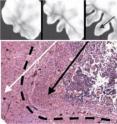
Researchers from Brown University and other institutions have developed a computational computer model of how brain tumors grow and evolve. The model is the product mathematical formulas based on the first principals of physics, such as conservation of mass, and it has allowed researchers to recreate tumor growth in a computer. Through subsequent repetitive testing against real tumors, they have also linked their computerized tumors to real-world brain tumors, or "gliomas," and can now watch tumor growth on a computer screen.
 Creating such a model is significant because it could help design specific, targeted treatments for individualized therapy. There is no cure for gliomas, which can kill quickly, often within 15 months of diagnosis. Massachusetts Sen. Ted Kennedy announced a year ago that he was suffering from this type of tumor, a malignant glioma of the brain.
Details of the research were highlighted at an April meeting of the American Association for Cancer Research. The full article is included in the May 15 edition of the journal Cancer Research.
"This helps us design a treatment," said Elaine Bearer, the lead author and professor of pathology and laboratory medicine at Brown. "By testing potential therapies in the computer, we can get our new drugs much faster to patients."
 Bearer, who also has faculty appointments in the Division of Engineering and the Department of Music, worked with a number of collaborators on the project, including co-author and Vittorio Christini, a mathematician at the University of Texas.
To conduct the study, Bearer and her collaborators developed a mathematical formula that incorporated a number of equations describing the process of tumor evolution and growth. The master computational model was built on formulas that predict how much oxygen tumor cells consume and the rate of oxygen diffusion, and quantitative measures of cell growth and metabolic rates. The model is a series of interdependent differential equations. Each equation includes variables, or numerical values that can be experimentally manipulated.
For example, to test if oxygen consumption rates influence tumor growth, the values assigned to those rates can be changed and the outcome observed on the computer screen — not unlike playing a computer game. The result: A three-dimensional matrix of a glioma that can be adjusted to see what its growth stage will be over time, including speed of growth, size and shape.
Researchers validated their computational model with glioma specimens. Bearer studied about 40 different human brain tumor samples. Bryan Kinney, a member of Bearer's lab, obtained the samples from a number of sources, including the Rhode Island Hospital pathology department, the Columbia University Brain Bank and the Cooperative Human Tissue Network, a division of the National Cancer Institute that helps increase access to human cancer tissue for research.
The samples, sliced and sealed in a specimen slide, were as large as a chick pea or as small as the head of a pin. The tumor specimens used in the studies had been removed for diagnosis or surgical treatment of the tumor.
Researchers compared their virtual computational tumor with the actual human brain tumor samples at different stages of tumor evolution. Through many rounds of checking computer output against the real-life tumors, researchers created a computational model that mimicked natural biological tumors in all respects.
They focused specifically on a glioma because it does not invade the body through a basement membrane as epithelial-based cancers do, such as tumors that grow in the colon, breast or prostate. In the brain, tumors grow without having to digest a basement membrane to invade adjacent tissue. A basement membrane is essentially boundary of a given tissue that separates cells from the surrounding connective tissue.
Bearer said she hopes the research will allow doctors to find drug targets for glioma. She also envisions using the computational model to find targets for personalized medical therapies, enabling it to quickly identify molecular targets, and then select from existing treatments or design new treatments to stop the tumor.

Could sarcastic computers be in our future? New math model can help computers understand inference
Researchers have created a mathematical model that helps predict pragmatic reasoning and may eventually lead to the manufacture of machines that can better understand inference, context and social rules.
Friday, 6 July 2012
Computer/Electrical Engineering
An International Journal
The impact of computers has nowhere been more revolutionary than in electrical engineering. The design, analysis, and operation of electrical and electronic systems are now dominated by computers, a transformation that has been motivated by the natural ease of interface between computers and electrical systems, and the promise of spectacular improvements in speed and efficiency.
Published since 1973, Computers and Electrical Engineering provides rapid publication of topical research into the integration of computer technology and computational techniques with electrical and electronic systems. The journal publishes papers featuring novel implementations of computers and computational techniques in areas like signal and image processing, high-performance computing, parallel processing, and communications. Special attention will be paid to papers describing innovative architectures, algorithms, and software tools.
Specific topics of interest include:
Applications of high-performance computing and novel computing systems
Internet-based, multimedia, and wireless networks and applications
Communications, especially wireless
Signal processing architectures, algorithms, and applications
Green technologies in information, computing, and communication systems
Multi-disciplinary areas, including robotics, embedded systems, and security
Subscribe to:
Posts (Atom)